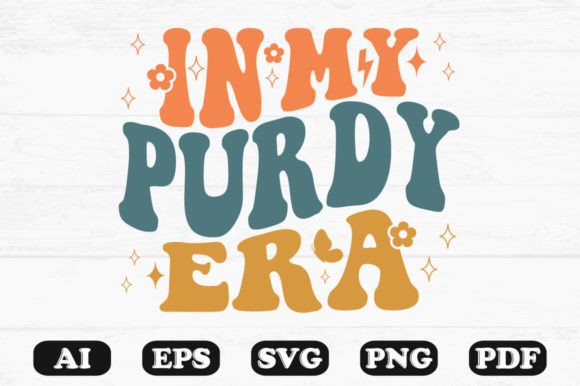
In My Purdy Era Retro Wavy Svg T-shirt
When I first opened the file for In My Purdy Era Retro Wavy Svg T-shirt, I didn't just see a trendy graphic; I saw a specific mood. The wavy typography immediately evokes that nostalgic, laid-back vibe of the late 60s and early 70s, but with a modern twist that fits perfectly into today's boutique aesthetic. As someone who has spent years evaluating digital assets for real-world embroidery projects, my first instinct was to look past the cool factor and ask: "Will this stitch well? Will it hold up on a garment?" The answer, generally speaking, is yes, provided you treat it like a serious piece of machine embroidery design rather than a quick cut-and-stick job.
The First Stitch: Visual Personality and Layout
The visual personality of In My Purdy Era Retro Wavy Svg T-shirt is defined by its fluid lines. Unlike rigid block letters, the wavy nature of the text suggests movement and softness. This makes it an ideal candidate for satin stitch applications where the thread needs to flow naturally across the fabric surface. When I imagine this design on a finished product, the curves catch the light differently than straight lines, adding a subtle depth that elevates the perceived value of the item.
For a small business owner or an Etsy seller, this design offers immediate brand consistency. It feels approachable yet professional. The layout is clean enough to work as a standalone statement on the chest of a sweatshirt or centered on the front of a tote bag. However, the retro wave style demands attention to detail. If the lettering is too compressed during digitization, the curves might merge together when stitched, creating a muddy mess. This is why reviewing the stitch density before hitting the start button is non-negotiable.
A Real-World Scenario: The Boutique Tote Bag Project
To understand how In My Purdy Era Retro Wavy Svg T-shirt performs in the wild, let's walk through a practical scenario. Imagine you are preparing inventory for a local craft fair or launching a new line of handmade gifts. You decide to create a custom embroidered tote bag using organic cotton canvas. This is a classic choice for craft business items because the fabric is sturdy enough to support the weight of the threads without puckering.
I would place the embroidery file centrally on the bag, perhaps slightly above the bottom seam to ensure visibility. The wavy text creates a friendly, welcoming message that customers love to read while carrying their purchases. The retro theme resonates with buyers looking for unique, personalized gifts that feel timeless. After stitching, the design should pop against the natural canvas color, especially if you use a high-contrast thread like mustard yellow or deep teal. The result isn't just a bag; it's a piece of wearable art that signals quality craftsmanship.
However, if you were planning to use this same design on a baby onesie, the approach changes. For baby embroidery, you must be mindful of the fabric texture. Baby clothes are often made of soft jersey or interlock knits, which stretch significantly. While the wavy lines of In My Purdy Era Retro Wavy Svg T-shirt are forgiving compared to sharp angles, you will need to use a tear-away or cut-away stabilizer to prevent the fabric from distorting under the tension of the machine. A poorly stabilized baby shirt can end up looking warped, ruining the charm of the vintage design.
Navigating Fabric Challenges and Hoop Sizes
Not every surface is created equal, and knowing where to apply caution is what separates a hobbyist from a pro. There are specific situations where In My Purdy Era Retro Wavy Svg T-shirt requires extra scrutiny. For instance, attempting this design on a curved surface like a baseball cap can be tricky. The waves of the text follow a horizontal path, which might not align perfectly with the curvature of a cap front panel unless the digitizing accounts for the distortion. In such cases, a smaller hoop size might be necessary to maintain control over the needle placement.
Textured fabrics present another hurdle. If you are working with heavy denim or a boucle knit, the needle might struggle to penetrate deeply enough to lay down the fill stitch properly. The result could be uneven coverage or skipped stitches. Similarly, thin fabrics like silk or lightweight rayon are risky for dense designs. The weight of the threads could cause the fabric to tear or bunch up around the edges. In these instances, testing on scrap fabric is the only way to guarantee a successful outcome.
Dark fabrics also demand strategic thinking. While the design itself is neutral, the thread colors you choose will determine the final impact. On a black t-shirt, white or gold threads will make the wavy text stand out dramatically. However, if you choose a dark thread on a dark background, the texture of the running stitch or satin fill becomes the primary visual element. This adds a sophisticated, tonal look that appeals to high-end clients, but it requires precise lighting to appreciate the details.
Impact on Product Value and Customer Trust
When you sell handmade products, your reputation hinges on the quality of the finish. A sloppy embroidery job can ruin the best design assets. Conversely, a crisp, well-executed version of In My Purdy Era Retro Wavy Svg T-shirt builds trust. Customers notice when the edges of the letters are clean and the spacing is consistent. They associate this precision with care and professionalism.
This design is particularly effective for commercial embroidery projects where branding matters. Whether it's a logo on a uniform or a slogan on a promotional apron, the retro wave style conveys a sense of fun and creativity. It helps your brand stand out in a crowded market. For Etsy sellers, high-quality mockups featuring this design can significantly increase click-through rates. Buyers want to visualize the texture and dimension of the stitching, so showing close-up shots of the finished product is essential.
Essential Designer Notes for Success
Before you commit to a full production run, there are several technical steps you must take. First, always test the design on scrap fabric that matches your final project material. This allows you to check the thread color contrast and ensure the stitch density is appropriate for the fabric weight. If the design looks too heavy, you may need to adjust the settings or select a lighter stabilizer.
Inspect the small details closely. Sometimes, the curves in the wavy text can become indistinct if the thread count is too low. Ensure that the digital embroidery file has been optimized for the specific machine you are using. Check whether the design works for both personal and commercial projects by reviewing the license terms included with the purchase. Many creators overlook this step, leading to legal issues later.
Finally, consider the longevity of the product. Embroidered items are meant to last, but frequent washing can degrade the threads if they are not secured properly. Use a high-quality stabilizer and trim excess threads carefully to ensure the finished product remains pristine wash after wash. By following these guidelines, you can transform In My Purdy Era Retro Wavy Svg T-shirt from a simple digital file into a tangible asset that drives sales and delights your customers.